
SERP Features: What They Are, Why They Matter, and How to Earn Them
When someone searches on Google, they don’t just see “10 blue links” anymore. They see maps, images, FAQs, reviews, product listings, AI summaries, and quick answers pulled from different websites.
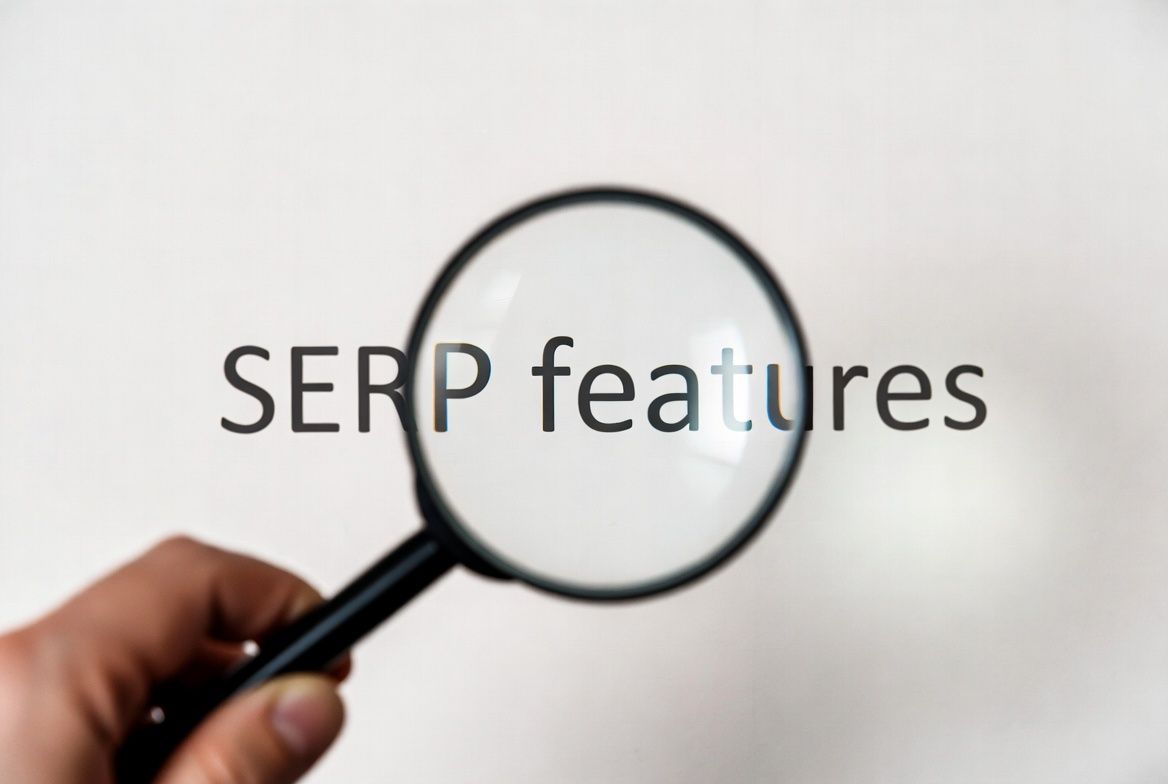
Those special elements, that stand out visually and often sit above or alongside normal organic results, are called SERP features (Search Engine Results Page features).
A few common examples:
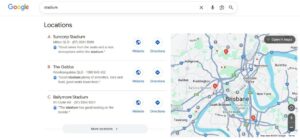
- Local Map Pack: The box with a map, business listings, star ratings, phone numbers, and “Call / Directions” buttons. Shows up for searches like “plumber near me” or “best physiotherapist in [suburb].”
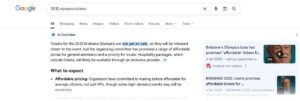
- Featured Snippet / AI-style summary: A short answer pulled directly into search (sometimes as a paragraph, list, or how-to steps). This appears before normal results and is essentially Google saying, “Here’s the answer.”
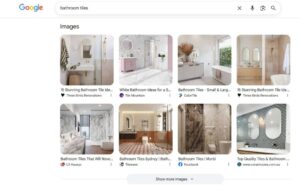
- Image Pack / Visual results: Rows of images for queries that are visual (e.g. “bathroom tile ideas,” “kids wall mural,” “wedding bouquets Brisbane”).
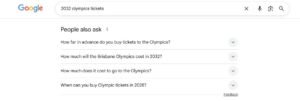
- People Also Ask: Expandable question boxes (“Does X help with Y?” / “How long does it take?”) that give instant answers and link to the source.
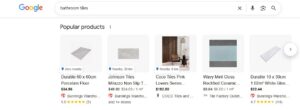
- Popular products / Shopping results: Product tiles with prices, ratings, availability, and sometimes shipping info. These show up for ecommerce/retail intent.
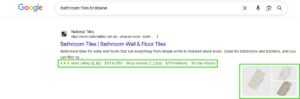
- Rich Snippets: Enhanced search results that include extra detail pulled from your page — for example price, stock status, recipe steps, FAQs, images, star ratings, etc. Rich Snippets stand out visually and increase click-through because you’re giving answers right in the result instead of just showing a title and description.
- Review snippets: Show star ratings and review summaries right under the result, taken from the page that’s ranking.
- Product snippets: Show important product info such as price, stock status, and customer ratings. These are especially powerful for online stores.
-
- Sitelinks: Provide quick shortcuts to important sections of the same site (e.g. Contact, Pricing, Shop) so users can jump straight to what they need.

All of these are visibility enhancers. They’re louder, more helpful, and take up more screen space than a normal single blue link.
Why SERP features matter for your business
You get chosen faster
People don’t always scroll. In a world of “quick answers,” you want to be inside the part of the screen that answers the question. SERP features let you do that.
If you appear in a Local Pack with a phone number and “Open now,” that’s call-ready traffic.
If one of your FAQs is pulled as a featured snippet, you’re the authority before anyone even clicks.
You look more trustworthy
Star ratings, photos, “in stock,” location, business hours, professional language — all of these create instant credibility. You’re not just visible. You look established.
That trust effect can lift conversions even for people who don’t click right away. They recognise your brand when they see it again.
You block competitors
Earning a SERP feature doesn’t just help you win attention. It helps you take attention away from the business that would’ve sat in that slot. You’re occupying premium real estate.
How to earn SERP features
You get SERP features by being specific, useful, and structured. Here’s how:
Answer real questions clearly
To be pulled into featured snippets, People Also Ask boxes, and AI-style summaries, your content has to actually answer the question in a clean, direct way.
Do this:
- Use customer questions as headings:“How much does [service] cost in [city]?”“How long does [process] take?”
- Give the answer in the first one or two sentences under that heading.
- Keep the tone helpful and plain-English.
You’re writing for humans — but you’re also making it really easy for Google to identify “this paragraph is an answer.”
Optimise for local proof
To show up in the Local Map Pack:
- Keep your Google Business Profile updated (services, hours, phone, categories, photos).
- Collect and respond to reviews regularly.
- Use consistent business name / address / phone across the web.
- Mention locations/suburbs on your website in a natural, helpful way (not just a list of postcodes at the bottom).
Google is more likely to feature businesses that look active, real, and nearby.
Use real images (and label them properly)
For Image Packs and visual results:
- Upload original, good-quality photos (not just stock).
- Use descriptive file names and alt text (“timber-deck-restoration-brisbane” instead of “IMG_9472”).
- Include short context around the image on the page (“Before and after of [service] for a client in [suburb]”).
Search engines don’t see the image the way you do — they read the words around it.
Show proof and details
Stars, ratings, “in stock,” “available today,” guarantees, turnaround times — this type of information helps you appear in shopping results, service panels, and even in AI-style summaries.
This is also where clarity beats fluff. “We’re the best” does nothing. “Same-day hot water replacement in the Brisbane Northside area” does.
Structure your pages so Google understands them
Consistent headings, FAQs, product info, service areas, pricing explanations, contact details, and opening hours all help search engines confidently match you to specific searches.
Think of it like this: the easier you make it to understand what you do, where you do it, and who it’s for, the easier it is for a search engine to feature you.
What this means going forward
Getting found online is no longer just “rank #1 for a keyword.” It’s:
- Can you appear in Maps when someone is ready to call?
- Can you appear in an AI-style answer when someone wants fast info?
- Can you appear with photos when someone is browsing visually?
- Can you appear with pricing or availability when someone is about to buy?
That’s what SERP features are: visibility in the exact format the customer wants, at the exact moment they’re deciding.
Businesses that understand that — and build content that’s helpful, specific, trustworthy, and easy to parse — are the ones that get picked first.
FAQ’s
What are SERP features?
SERP features are special elements in Google’s results — like map listings, star ratings, FAQs, image rows, or “People Also Ask” questions — that go beyond a normal blue link. They’re designed to answer the user faster.
Is this just for big brands?
Not at all. Local businesses, service providers, online stores, and even small niche brands can earn SERP features with clear info, real proof, and well-structured content.
Will showing up in SERP features help my brand long-term?
Yes. The more places you appear on the results page (map, images, reviews, answers), the more familiar and credible your brand feels. That builds trust, which leads to higher conversion.


Comments (35)